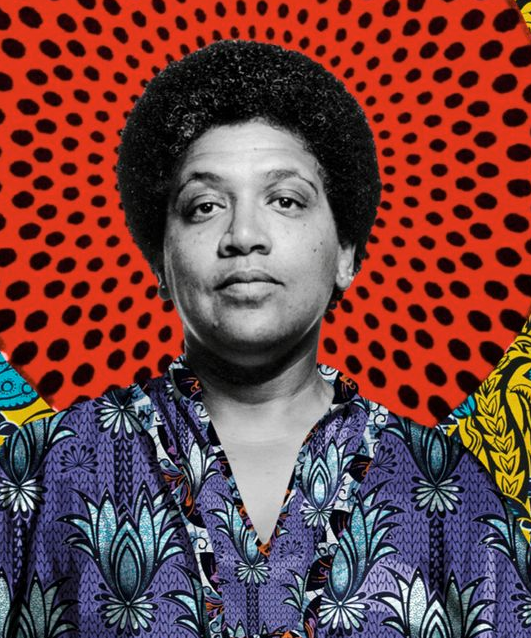
Famous Quotes on Action and Voice
- “Your silence will not protect you”.
- “When I dare to be powerful, to use my strength in the service of my vision, then it becomes less and less important whether I am afraid”.
- “The master’s tools will never dismantle the master’s house”.
- “I am not free while any woman is unfree, even when her shackles are very different from my own”.
On Self-Definition and Identity
- “If I didn’t define myself for myself, I would be crunched into other people’s fantasies for me and eaten alive”.
- “I am who I am, doing what I came to do, acting upon you like a drug or chisel to remind you of your me-ness as I discover you in myself”.
- “You do not have to be me in order for us to fight alongside each other”
On Change and Survival
- “Change is the immediate responsibility of each of us, wherever and however we are standing, in whatever arena we choose”.
On Poetry and Feeling
- “I write because I am a warrior and my poetry is my primary weapon”.
Sources; Goodreads, diversity.sonoma.edu, medium.com
During the 1960s, Lorde began publishing her poetry in magazines and anthologies, and also took part in the civil rights, antiwar, and women’s liberation movements. Lorde published her first volume of poems, The First Cities, in 1968. That same year, she earned a grant from the National Endowment for the Arts and became the writer-in-residence at Tougaloo College, a historically Black college in Mississippi. There, she discovered her love of teaching and met Frances Clayton, a professor of psychology and her partner until 1989.
Lorde’s work was already notable for her strong expressions of African American identity, but her second anthology, Cables to Rage (1970), took on more overtly political themes, such as racism, sexism, and violence. It also included “Martha,” a poem that acknowledged her lesbianism. Her third collection, From a Land Where Other People Live (1973), was a finalist for a National Book Award for Poetry. Lorde’s work is characterized by its emphasis on matters of social and racial justice, as well as its authentic portrayal of queer sexuality and experience.
Lorde continued writing prolifically through the 1970s and 1980s, exploring the intersections of race, gender, and class, as well as examining her own identity within a global context. Her 1978 collection, The Black Unicorn, was inspired by a trip to Benin with her children. In it, she drew strength from a spiritual connection with the goddesses of African mythology. In 1982, Lorde released what she coined a “biomythography”: Zami: A New Spelling of My Name. Combining elements of history, biography, and myth, it told of Lorde’s journey of self-discovery and acceptance as a Black lesbian in her childhood and young adult years. Lorde’s 1984 collection, Sister Outsider: Essays and Speeches, included her canonical essay, “The Master’s Tools Will Never Dismantle the Master’s House,” which called on feminists to acknowledge the many differences among women and to utilize them as a source of power rather than one of division.
Diagnosed with breast cancer in 1977, Lorde found that the ordeals of cancer treatment and mastectomy were shrouded in silence for women, and found them even further isolating as a Black lesbian woman. Lorde felt that the narratives of coping and healing she did encounter were designed solely for white, heterosexual women. In an effort to combat this silence and to foster connection with other lesbians and women of color facing the same struggle, Lorde offered a raw portrait of her own pain, suffering, reflection, and hope in The Cancer Journals (1980). The book won the American Library Association’s Gay Caucus Book of the Year Award for 1981 and became a classic work of illness narrative.
Lorde’s advocacy on behalf of women, people of color, and the LGBTQ community continued outside her literary career as well. In 1979, she was a prominent speaker at the National March on Washington for Lesbian and Gay Rights. In 1981, with Barbara Smith and several other writers, Lorde founded Kitchen Table: Women of Color Press. Kitchen Table was devoted to promoting feminists of color and their writings. Lorde was also a founding member of Sisterhood in Support of Sisters in South Africa, an organization that advocated on behalf of women living under apartheid.
Read More Here: https://www.womenshistory.org/education-resources/biographies/audre-lorde
~Nikki


Leave a comment